
Columbus Day 2026 Payroll Deadline: How to Avoid Delayed Direct Deposits
Create professional pay stubs online with our free check stub maker. Real 2026 tax calculations for...

Financial forecasting is a vital practice for any business aiming to grow and thrive in a competitive environment.
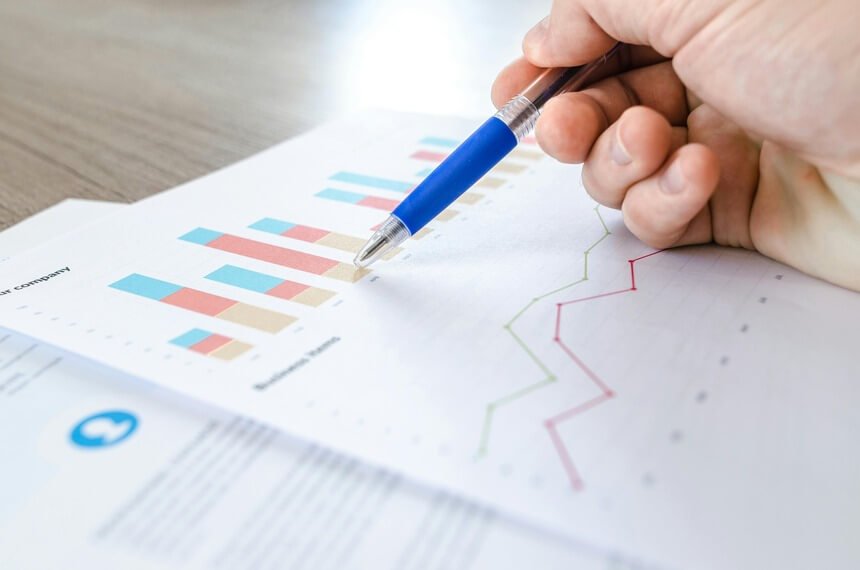
Financial forecasting is one of the most powerful tools a business owner can use to plan for growth, manage risk, and make informed decisions. Whether you're launching a startup or managing an established company, understanding how to project future financial performance is essential to long-term success. Forecasting helps you anticipate revenue, control costs, and prepare for market changes, giving you a clearer picture of where your business is headed.
While forecasting may sound complex, it doesn’t have to be. With the right approach and tools, even small businesses can develop accurate and actionable financial projections. Below are key strategies and insights to help you build a reliable forecast and use it to guide your business toward sustainable success.
The foundation of any financial forecast is historical data. If your business has been operating for a year or more, you already have valuable information that can help predict future performance. Review past income statements, balance sheets, and cash flow reports to identify trends in revenue, expenses, and profit margins.
Look for seasonal patterns, recurring costs, and growth rates. These insights can help you estimate future sales and expenses with greater accuracy. If you're a newer business without much historical data, industry benchmarks and competitor analysis can serve as useful starting points. The goal is to create a realistic baseline that reflects your business’s current trajectory.
There are several forecasting methods available, and the best one depends on your business model, goals, and available data. The two most common approaches are qualitative and quantitative forecasting.
Quantitative forecasting relies on numerical data and statistical models. It’s ideal for businesses with consistent historical records and predictable trends. Qualitative forecasting, on the other hand, uses expert judgment, market research, and scenario planning. This method is useful when data is limited or when external factors, such as economic shifts or new product launches, play a significant role.
Many businesses use a combination of both methods to balance data-driven insights with strategic intuition. Whichever approach you choose, consistency is key. Regularly updating your forecast ensures it remains relevant and responsive to changing conditions.
Accurate forecasting requires a clear understanding of your cost structure. Break down your expenses into fixed and variable categories. Fixed costs, such as rent, salaries, and insurance, remain relatively stable regardless of sales volume. Variable costs, like raw materials, shipping, and commissions, fluctuate with production and sales.
By separating these costs, you can better anticipate how changes in revenue will impact your bottom line. For example, if you expect a 20 percent increase in sales, your variable costs will likely rise as well. Including these projections in your forecast helps you plan for cash flow needs and avoid surprises.
Financial forecasting is not just a reporting exercise; it’s a decision-making tool. Use your projections to evaluate potential investments, hiring plans, marketing campaigns, and expansion opportunities. A well-constructed forecast can reveal whether you have the financial capacity to pursue new initiatives or if you need to adjust your strategy.
It also helps you set realistic goals and performance benchmarks. By comparing actual results to your forecast, you can identify areas where your business is overperforming or underperforming. This feedback loop allows you to refine your operations and stay aligned with your long-term objectives.
If you're unsure how to interpret your forecast or apply it to strategic planning, consider working with a financial advisor in Phoenix or your local area. A professional can help you analyze your data, model different scenarios, and develop a financial roadmap tailored to your business goals.
No forecast is perfect, and unexpected events can quickly alter your financial outlook. That’s why it’s important to build multiple scenarios into your forecasting model. Create best-case, worst-case, and most-likely projections to account for different possibilities.
Scenario planning helps you prepare for uncertainty and make more resilient decisions. For instance, if sales fall short of expectations, your worst-case forecast can guide cost-cutting measures or cash flow adjustments. On the other hand, a best-case scenario can help you plan for reinvestment or scaling opportunities.
By considering a range of outcomes, you reduce the risk of being caught off guard and increase your ability to respond proactively to changes in the market.
Financial forecasting is a vital practice for any business aiming to grow and thrive in a competitive environment. By leveraging historical data, choosing the right forecasting methods, understanding your cost structure, and planning for multiple scenarios, you can create a clear and actionable financial roadmap. Forecasting not only helps you predict success but also empowers you to shape it through informed and strategic decision-making.
You must be logged in to post a comment.
Explore our curated selection of various articles in this category

Create professional pay stubs online with our free check stub maker. Real 2026 tax calculations for...
Learn everything Maryland business owners need to know about local business taxes in 2026, including...

Converting business equity into lasting personal wealth is a journey that moves from strategy to exe...
